
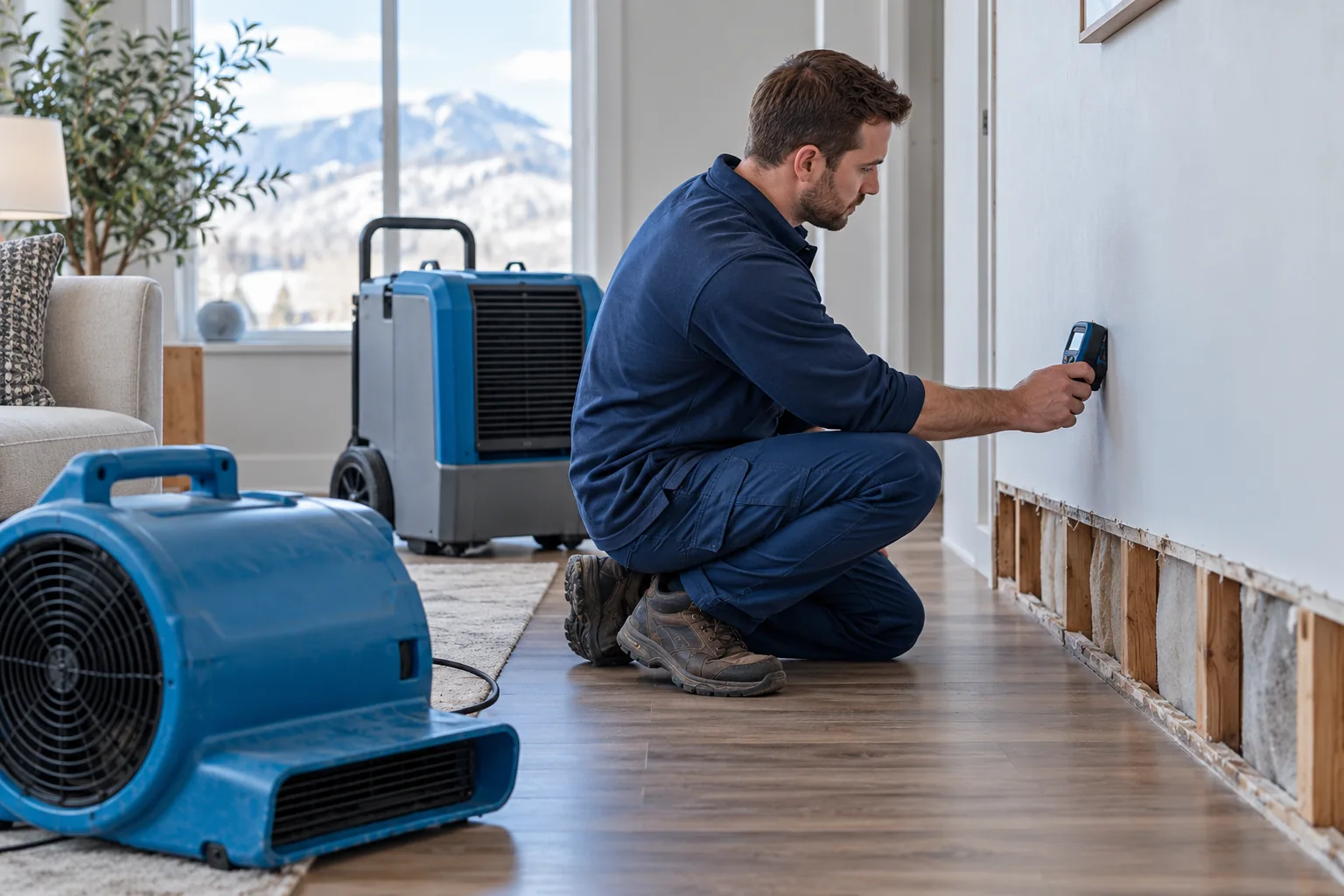
Check that this guide fits your situation.
Use this guide when
A small, recent leak from a known clean-water supply with no soaked wall cavity, sewage or electrical exposure.
Do not use it for
Sewage, floodwater, unknown water source, ceiling sagging, wet wiring or widespread soaked materials.
Stop and get help if
- Water has reached outlets, cords or equipment.
- The water may be contaminated or the source is unclear.
- Materials remain wet, odor develops or damage extends beyond the visible area.
Supplies
- Towels or absorbent materials
- Phone camera
- Fan or dehumidifier only in a dry, electrically safe location
Take it one step at a time.
- 01
Confirm the source is controlled
Make sure the clean-water supply is off and no new water is appearing. If it is still leaking, address the shutoff or call for plumbing help.
Why this mattersDrying cannot succeed while the source continues. - 02
Check the area before touching it
Keep out of standing water near electricity. If a ceiling is bulging, materials are unstable or the source may be sewage, stop and call.
Why this mattersElectrical, structural and contamination hazards change the response. - 03
Document the extent
Photograph the affected floor, baseboard or cabinet from a safe area and note when the leak started.
Why this mattersA record helps track whether the affected area changes and supports a professional assessment. - 04
Remove accessible water
Use towels or absorbent materials on a small hard surface. Do not pull apart walls, flooring or built-in cabinetry yourself.
Why this mattersPrompt removal reduces surface wetness while avoiding damage to hidden systems. - 05
Dry safely
If outlets and equipment are dry and safe, increase ventilation and use a fan or dehumidifier according to its instructions. Keep cords out of wet areas.
Why this mattersEPA recommends drying water-damaged areas and items as soon as possible, generally within 24–48 hours. - 06
Recheck and escalate
Check for lingering dampness, staining or odor. If materials are porous, the area is larger than it first appeared, or it cannot dry promptly, request a restoration assessment.
Why this mattersVisible dryness may not reflect concealed moisture.
Yes → document, remove accessible water and dry promptly.
No → avoid DIY cleanup and call for professional assessment.
Check the result.
If it improved
Keep monitoring for dampness or odor and repair the original leak.
If it did not
Call for restoration and plumbing help; describe the water source and affected materials.
Source guidance
These public resources informed the safety boundaries and general steps. The exact equipment and conditions at your property may differ.