
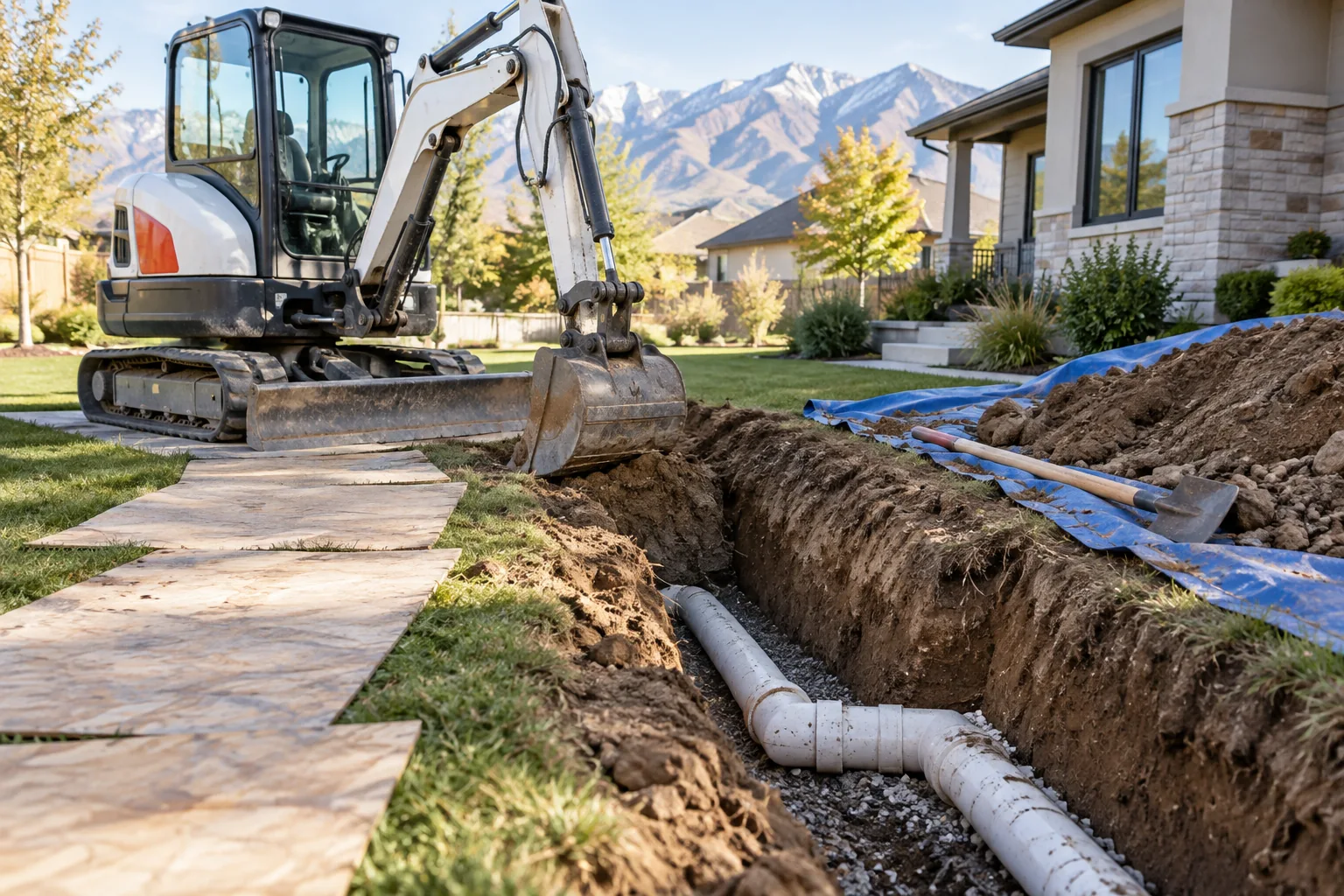
Check that this guide fits your situation.
Use this guide when
A planned sewer dig, replacement or trenchless evaluation after a contractor has proposed work.
Do not use it for
Digging, marking utilities yourself as a substitute for a locate, entering a trench or moving utility flags.
Stop and get help if
- You see unmarked or damaged utilities in the work area.
- The proposed access or surface restoration is unclear.
- The ground is unstable or an excavation is open.
Supplies
- Property or utility records, if available
- Phone camera
- List of site contacts and access instructions
Take it one step at a time.
- 01
Review the proposed work area
Ask the contractor to identify the anticipated access points and work zone. Do not assume a trenchless method means no excavation.
Why this mattersEven lower-disruption approaches may need access pits or existing entry points. - 02
Identify private site features
Tell the crew about irrigation, landscape lighting, detached-building power, private water or sewer lines, gates and hardscape. Share any plans you have.
Why this mattersPublic utility marks may not cover privately owned lines. - 03
Leave locating to the responsible parties
Ask how the excavating crew will handle Blue Stakes notification and any private-line locating. Do not disturb paint or flags.
Why this mattersThe party actually excavating has locating responsibilities under Utah’s system. - 04
Photograph existing conditions
Take pictures from safe ground of the work area, landscaping and surfaces before equipment arrives.
Why this mattersA baseline makes the intended restoration scope easier to discuss. - 05
Confirm the written scope
Ask which pipe sections, connections, permits, access work, backfill and surface restoration are included and who handles each item.
Why this mattersUnderground work and above-ground restoration are distinct cost and responsibility items. - 06
Prepare safe access
Move only loose personal items and vehicles if the crew asks. Keep children and pets away from the work zone; never enter an open excavation.
Why this mattersA clear work area supports safe access without disturbing utility marks.
Yes → keep the area clear and follow the crew’s site instructions.
No → resolve the open questions before work begins; do not dig yourself.
Check the result.
If it improved
Keep the written scope and before photos together throughout the project.
If it did not
Ask the contractor to clarify locating, access or restoration before authorizing excavation.
Source guidance
These public resources informed the safety boundaries and general steps. The exact equipment and conditions at your property may differ.